

Throughout my professional life, I have had the opportunity to work across several sectors that shape national development — telecommunications, corporate leadership, entrepreneurship, and public service. Each stage of this journey has influenced the way I approach leadership today. My experiences in both the private and public sectors have given me a broad perspective on economic growth, governance, and the responsibilities that come with managing institutions that affect millions of people.
Today, as Chairman and Chief Executive Officer of the Philippine Amusement and Gaming Corporation (PAGCOR), I oversee an organization that plays a significant role in the Philippine economy. PAGCOR is not only a regulator of the gaming industry but also a government corporation whose revenues support national development programs, infrastructure projects, and social initiatives across the country.
Leading an institution of this scale requires a deep commitment to transparency, responsible governance, and long-term strategic thinking. My career has always been guided by these principles.
My Early Career and Professional Background
My professional career began in the private sector, where I had the opportunity to work in one of the most important industries shaping modern economic development — telecommunications.
During my time at the Philippine Long Distance Telephone Company (PLDT), I gained invaluable experience in corporate management, organizational strategy, and large-scale operations. Telecommunications is a sector that connects businesses, communities, and government institutions. Working within such an environment provided insight into how major infrastructure systems operate and how they influence national growth.
One of the most valuable lessons I learned during this period was the importance of strategic planning and coordination. Large organizations require clear communication between departments, strong leadership structures, and the ability to make decisions that balance operational efficiency with long-term objectives.
My work also involved coordination between corporate leadership and government institutions. This role introduced me to the complex relationship between regulation and innovation. Industries must be able to grow and adapt, but they also require responsible oversight to ensure stability and fairness.
That experience helped shape my understanding of how public policy and private enterprise can work together to create sustainable economic progress.
Entrepreneurial and Corporate Leadership
After gaining extensive experience in corporate operations, I expanded my professional activities into business development and entrepreneurship.
One of the most significant roles I held during this period was serving as Chief Executive Officer of Nationstar Development Corporation. Leading a development company presented a new set of challenges and opportunities. Infrastructure and development projects require careful coordination between investors, government agencies, contractors, and communities.
This environment demanded a leadership style that was both strategic and adaptable. Every project required long-term financial planning, risk assessment, and the ability to navigate complex regulatory environments.
Entrepreneurship teaches lessons that traditional corporate roles sometimes cannot provide. It requires resilience, adaptability, and the ability to identify opportunities in rapidly changing markets. As a business leader, I learned how to evaluate investment potential, manage resources efficiently, and build teams capable of executing large-scale projects.
These experiences deepened my understanding of economic ecosystems — how industries grow, how investment flows, and how leadership decisions influence long-term outcomes.
The lessons I gained from the private sector would later become extremely valuable when addressing regulatory challenges and industry modernization within the gaming sector.
My Journey Into Public Service
While much of my early career was rooted in business and corporate leadership, I have always believed that professional success carries with it a responsibility to serve the public.
This belief eventually led me into public service when I served as Vice Mayor of Malolos in the province of Bulacan.
Local governance provides a very different perspective from corporate leadership. Instead of focusing solely on financial performance or organizational strategy, public service places communities at the center of every decision. Policies and initiatives implemented at the local level have direct and immediate effects on citizens’ daily lives.
During my time in public office, I worked on initiatives that focused on infrastructure development, community programs, and local economic growth. These projects reinforced the importance of transparency, accountability, and responsible governance.
Public institutions must always operate with the highest level of integrity. Leaders are entrusted with resources that ultimately belong to the people, and that responsibility must guide every decision.
My experience in public service strengthened my belief that sustainable development requires cooperation between government, private industry, and communities.
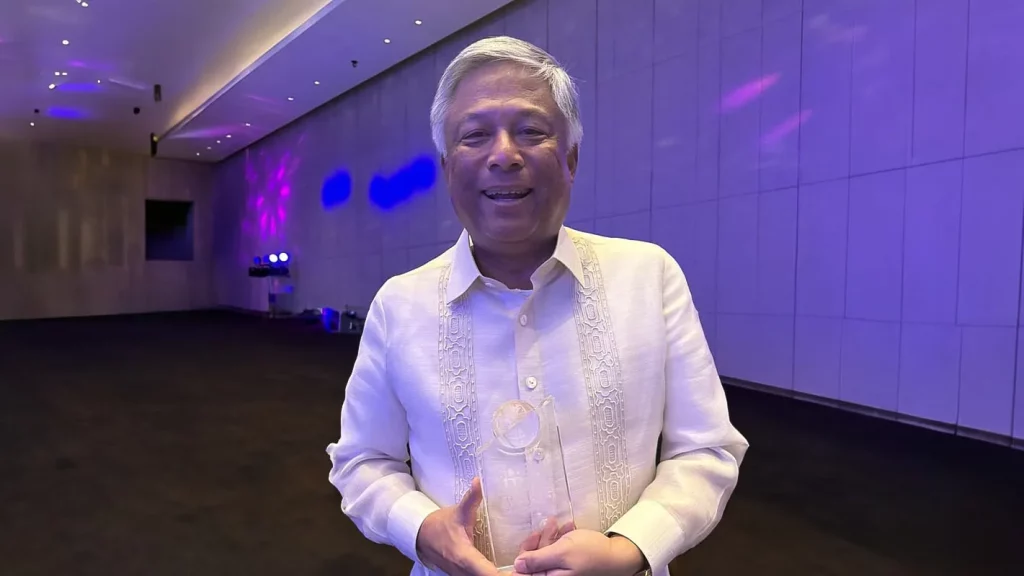
The Path That Led Me to PAGCOR
My experiences in telecommunications, entrepreneurship, and public service eventually converged when I was appointed Chairman and Chief Executive Officer of the Philippine Amusement and Gaming Corporation (PAGCOR).
PAGCOR holds a unique position within the Philippine economy. It serves both as a regulator overseeing the gaming industry and as a government corporation generating revenue that supports national development initiatives.
Because of this dual role, PAGCOR carries significant responsibility. The organization must ensure that the gaming industry operates under strict regulatory standards while also contributing to economic growth and public funding programs.
When I assumed leadership of PAGCOR, one of my primary objectives was to strengthen the institution’s commitment to transparency and responsible governance. The gaming industry is evolving rapidly, driven by digital platforms, technological innovation, and changing consumer behavior.
Managing this transformation requires a regulatory framework that is modern, adaptable, and aligned with international standards.
At the same time, it is essential that the industry operates with fairness and integrity. Public trust is fundamental to the success of any regulatory institution.
My role at PAGCOR represents the continuation of a professional journey shaped by both private enterprise and public service. The goal has always been the same — to guide industries through periods of transformation while ensuring that progress benefits society as a whole.
Leading PAGCOR in a Transforming Gaming Industry
When I assumed the role of Chairman and Chief Executive Officer of the Philippine Amusement and Gaming Corporation (PAGCOR), I fully understood that the organization stood at a critical point in the evolution of the Philippine gaming industry.
The gaming sector has long played a meaningful role in supporting national development in the Philippines. Through PAGCOR, revenue generated from regulated gaming activities contributes directly to government programs, infrastructure projects, healthcare initiatives, and community development across the country.
However, the global gaming landscape has been changing rapidly. Technological innovation, digital platforms, and the rapid expansion of online gaming have transformed how the industry operates worldwide. These developments require regulators to continuously adapt in order to maintain a fair, transparent, and well-regulated environment.
One of my priorities upon assuming leadership was to ensure that PAGCOR remains both a responsible regulator and a modern institution capable of responding to industry transformation.
The gaming industry today operates within a global ecosystem. Players can access digital platforms from virtually anywhere, and operators increasingly rely on advanced technology to deliver entertainment experiences. For regulators, this means strengthening oversight while also supporting innovation that benefits both the industry and the national economy.
PAGCOR must therefore balance three critical objectives: ensuring regulatory integrity, promoting sustainable industry growth, and protecting the interests of the Filipino public.
Strengthening the Role of PAGCOR
PAGCOR is unique among many global gaming regulators because it operates under a dual mandate. In addition to regulating the gaming industry, the organization also operates its own gaming facilities and generates revenue for the national government.
This structure places significant responsibility on the organization to maintain transparency and accountability at every level of operation.
Under my leadership, one of the central goals has been to reinforce institutional integrity while continuing to modernize the organization’s regulatory framework. This involves improving operational efficiency, strengthening compliance mechanisms, and ensuring that industry standards remain aligned with international best practices.
Responsible regulation is essential in maintaining public trust. Gaming, like any major industry, must operate within clear rules and strict oversight. Effective regulation protects players, supports legitimate operators, and ensures that revenues generated from gaming continue to benefit national development.
By maintaining strong regulatory oversight, PAGCOR contributes to the stability of the gaming ecosystem while allowing responsible operators to thrive.
Modernizing the Philippine Gaming Framework
Another important priority has been adapting the Philippine gaming framework to reflect the realities of a rapidly evolving digital environment.
The rise of online gaming, mobile platforms, and international gaming networks has fundamentally changed the structure of the industry. As regulators, we must continuously update policies to address emerging technologies and ensure that operators comply with established standards of fairness and transparency.
Modern regulation is not simply about restricting activity; it is about creating an environment where innovation can occur responsibly.
This involves collaboration with industry stakeholders, technology providers, and international regulatory bodies. Through dialogue and cooperation, regulators can develop frameworks that both encourage innovation and protect the public.
At PAGCOR, we have focused on strengthening regulatory oversight while also supporting the continued development of the Philippine gaming industry as a major contributor to the national economy.
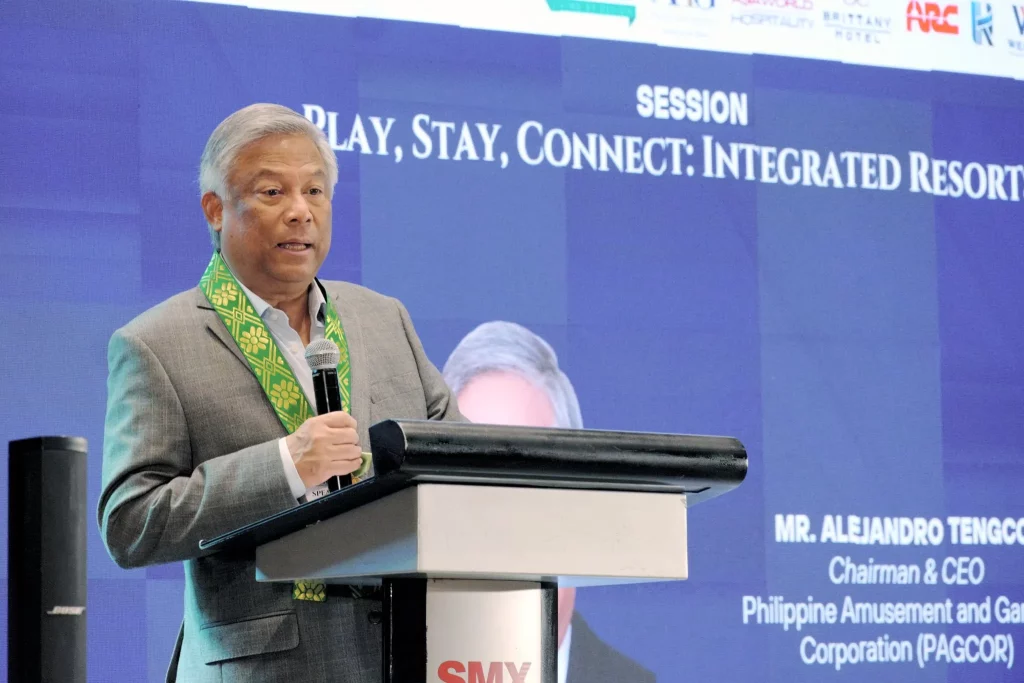
Economic Contribution of the Gaming Sector
The gaming industry remains one of the most significant contributors to government revenue in the Philippines.
Funds generated through PAGCOR operations and licensing programs help support a wide range of national initiatives. These include public infrastructure, healthcare programs, disaster relief efforts, and educational initiatives that benefit communities throughout the country.
For this reason, maintaining a healthy and well-regulated gaming sector is not only an industry priority but also a national economic objective.
The continued growth of the gaming industry reflects both strong domestic demand and the Philippines’ position as an important hub within the Asian gaming market.
Tourism, integrated resort developments, and regulated gaming operations all contribute to the broader economic ecosystem. When managed responsibly, the sector can provide employment opportunities, attract international investment, and generate sustainable revenue for government programs.
As regulators, our responsibility is to ensure that this growth remains transparent, fair, and aligned with national development goals.
PAGCOR Gaming Revenue Growth
Growth of the Philippine regulated gaming market
*Estimated market growth based on PAGCOR industry reports
Philippine Gambling Market Structure
Key segments of the regulated gambling industry in the Philippines
iGaming Growth in the Philippines
Expansion of regulated online gaming and e-games market
Growth driven by mobile gaming adoption, regulated e-games expansion, and international demand.
The Future of iGaming in the Philippines
Over the past few years, the global gaming industry has undergone a profound transformation driven by technology, digital platforms, and changing consumer behaviour. The Philippines is no exception to this shift. As digital infrastructure expands and mobile connectivity improves across the country, the role of online gaming within the broader entertainment ecosystem continues to grow.
From my perspective, the development of the iGaming sector represents both an opportunity and a responsibility for regulators. Innovation brings economic growth, new employment opportunities, and increased revenue for national development programs. At the same time, it requires thoughtful regulatory frameworks that ensure transparency, integrity, and player protection.
The Philippines has long held a unique position in the Asian gaming landscape. Integrated resorts, tourism-driven casinos, and regulated gaming operations have contributed significantly to national revenue. Today, the rise of digital gaming platforms adds a new dimension to this ecosystem.
Mobile gaming, in particular, has transformed how players interact with online entertainment. The accessibility of smartphones and high-speed internet allows players to participate in regulated gaming platforms from virtually anywhere. This shift has accelerated the growth of licensed e-games and remote gaming services across the country.
However, growth alone is not the objective. Responsible expansion is essential.
As regulators, our role is to ensure that technological innovation occurs within a secure and transparent environment. A modern regulatory system must evolve alongside the industry it oversees. This means continuously reviewing policies, strengthening compliance systems, and maintaining close cooperation with licensed operators.
Through PAGCOR, we work to create a framework that supports innovation while maintaining strict oversight standards.
Technology and the Evolution of Digital Gaming
Technology is the driving force behind the next phase of development in the gaming industry. Artificial intelligence, advanced data analytics, and mobile-first platforms are transforming how gaming products are developed and delivered.
For regulators, these technologies offer new tools to improve monitoring and compliance. Advanced analytics can help detect irregular betting patterns, identify potential fraud risks, and enhance overall system transparency.
At the same time, technology improves the player experience. Modern platforms are designed to be intuitive, secure, and accessible. Players today expect seamless mobile interfaces, fast payment systems, and reliable platform stability.
Another important trend is the growing integration of live gaming experiences with digital platforms. Live dealer games, streamed in real time from licensed studios, combine the authenticity of traditional casinos with the convenience of online access.
This hybrid model reflects the future direction of the industry.
Rather than replacing land-based gaming, digital platforms complement existing operations and expand the overall entertainment ecosystem.
The Philippines as a Regional Gaming Hub
The Philippines has established itself as one of the most significant gaming jurisdictions in Southeast Asia. The country’s regulatory framework, combined with strong tourism infrastructure and established integrated resort developments, has helped position the Philippines as a regional hub for gaming and entertainment.
This reputation has attracted both international investment and technological innovation.
As the industry continues to evolve, maintaining this position requires a commitment to regulatory stability and institutional credibility. Investors, operators, and technology providers all depend on predictable regulatory environments.
PAGCOR’s responsibility is to maintain this balance.
We aim to support industry growth while ensuring that the gaming sector continues to operate under strict standards of fairness, transparency, and accountability.
A well-regulated industry not only protects players but also strengthens the long-term sustainability of the market.
Balancing Innovation and Regulation
The rapid growth of iGaming presents regulators with a complex challenge. On one hand, technological progress enables new forms of entertainment and economic activity. On the other, it introduces new risks that must be carefully managed.
Effective regulation is not about restricting innovation — it is about guiding it.
Our goal is to ensure that operators meet strict licensing standards, adhere to responsible gaming policies, and implement secure technology systems that protect players and financial transactions.
This includes enforcing compliance requirements, monitoring gaming activity, and cooperating with international regulatory partners to maintain best practices across the industry.
Through responsible regulation, the Philippines can continue to develop a gaming industry that contributes to economic growth while maintaining public confidence.
PAGCOR Regulatory Ecosystem
How the Philippine gaming industry is structured and regulated
Regulated gaming contributes directly to economic development and public programs in the Philippines.
Responsible Gaming in the Digital Era
One of the most important priorities for any modern gaming regulator is ensuring responsible gaming practices.
Digital platforms make gaming more accessible than ever before. While this accessibility creates opportunities for economic growth, it also requires enhanced safeguards to protect players.
Responsible gaming policies are therefore an essential component of PAGCOR’s regulatory framework.
These policies include measures designed to prevent underage gaming, promote player awareness, and provide tools that allow individuals to manage their gaming behaviour responsibly.
Education also plays a crucial role. By providing clear information about responsible gaming and potential risks, regulators and operators can work together to create a safer and more transparent environment for players.
Ultimately, the long-term success of the gaming industry depends on maintaining trust.
Players must feel confident that games are fair, platforms are secure, and regulators are actively protecting their interests.
Licensed Platforms and the Role of Responsible Operators
As the Philippine gaming industry continues to expand, licensed operators play an increasingly important role in maintaining a safe and transparent gaming environment. Regulators such as PAGCOR establish the framework that ensures operators meet strict standards related to player protection, financial transparency, and fair gaming practices.
From a regulatory perspective, the goal is not only to control the industry but also to support responsible platforms that operate within the legal framework. Licensed casinos that follow these standards help build trust between players, operators, and regulators.
This is particularly important in the online gaming sector, where digital platforms must meet high technical and compliance requirements. Secure payment systems, transparent game mechanics, and responsible gaming tools are all essential components of a modern iGaming platform.
Casinos that operate responsibly within regulated markets demonstrate how the industry can balance entertainment with accountability. Platforms such as Fachai Casino, for example, represent a new generation of digital gaming services designed to provide players with a secure and accessible environment while aligning with industry best practices.
For players in the Philippines, choosing regulated and reputable platforms is an important step toward ensuring a safe gaming experience. By supporting responsible operators and maintaining strong regulatory oversight, the Philippine gaming industry can continue to grow while protecting the interests of players and the broader public.
The development of the Philippine gaming industry has been shaped by a balance between innovation, regulation, and responsible growth. Institutions like PAGCOR continue to play a central role in maintaining that balance by ensuring that operators meet strict standards while allowing the market to evolve alongside modern technology.
At the same time, the rise of digital platforms is changing how players interact with gaming entertainment. Mobile access, improved payment systems, and new game formats are expanding the reach of the industry far beyond traditional casino floors.
For players, the most important factor remains trust. Choosing platforms that operate transparently and follow established industry standards is essential for a safe and reliable gaming experience. Regulated operators and responsible casinos help maintain the stability of the market while offering players the entertainment they expect.
As the Philippine gaming sector continues to grow, the combination of strong regulation, technological innovation, and responsible operators will remain the foundation that supports its long-term development.


